Fish table software is the code, math model, and back-office tools that run a fish shooting game. Before you buy it from a studio, a platform vendor, or a fish game distributor, check three things. First, confirm the legal fit for your target states. Second, ask for independent test proof. Third, confirm who owns the source code and the game math.
This guide is for business buyers. It covers the main vendor types, the legal questions to settle first, and a practical vetting checklist. If you are a player, our guide to legit fish table casino sites is a better starting point.
Key Takeaways
- Fish table software includes the game, the math model, the player account system, and the admin tools.
- Law is the first filter. Skill-versus-chance rules and sweepstakes bans differ by state.
- Ask for certificates, math sheets, and source code terms in writing.
- Verify every vendor claim with the lab, the regulator, or a reference client.

What Is Fish Table Software?
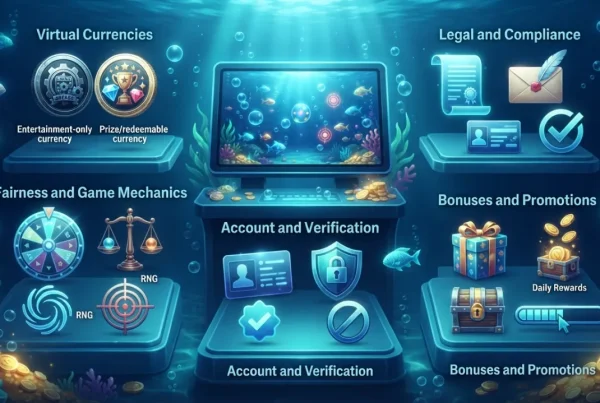
Fish table software is the full technical stack behind a fish shooting game. The visible part is the game client, with its fish, cannons, and bonus rounds. Behind it sit the random number generator, the math model, the player wallet, and the admin panel.
A sweepstakes operator needs extra tools too. These include dual-currency handling, mail-in entry (AMOE) management, ID checks, and redemption workflows. Review sites such as Gambling.com list studios like KA Gaming, JILI, Mascot Gaming, and BGaming among fish game providers. Separately, some platform vendors advertise sweepstakes casino software with large game libraries. Treat those as vendor claims until you verify them.

Which Types of Fish Game Vendors Can You Buy From?
Vendors fall into five groups. Each one solves a different problem.
| Type | What you get | What to watch |
|---|---|---|
| Game studio | Individual fish games to integrate | You still need a platform, wallet, and compliance tools |
| Platform or aggregator | A lobby with games from many studios | Check which fish titles are included and licensed |
| Turnkey or white label | A ready site with games, accounts, and admin | Ask what you own and what you only rent |
| Fish game distributor | Resold or sublicensed games | Confirm the full chain of rights back to the studio |
| Custom developer | A game built to your spec | Expect more cost and longer testing |

Which Legal Questions Should You Settle First?
Legal fit comes before features. Three issues matter most.
Game classification. States treat fish tables differently. A North Carolina appeals court ruled that fish table games are games of chance, and our fish table games near me guide covers that case. Nevada, by contrast, lets regulators sort gaming devices into skill, chance, and hybrid types.
Sweepstakes bans. California’s AB 831 makes it illegal to knowingly and willfully engage in, promote, or facilitate dual-currency sweepstakes casinos. The wording covers anyone who promotes or facilitates such sites, not only operators.
Free entry. A sweepstakes needs a real free method of entry. Legal commentary from Mondaq notes that entrants who use it must get the same odds as paying entrants.
Hire a gaming or promotions lawyer before you sign anything. For a starting point on each state’s rules, see our guide to casino laws by state. This article is not legal advice.

How Should You Vet Fish Table Software Before Buying?
Use this eight-point checklist, and ask for every answer in writing.
- Independent testing. Ask for certificates from a recognized lab. GLI-19 includes requirements for random number generators. Then contact the lab to confirm each certificate. Check dates too, because public certificates list an end date.
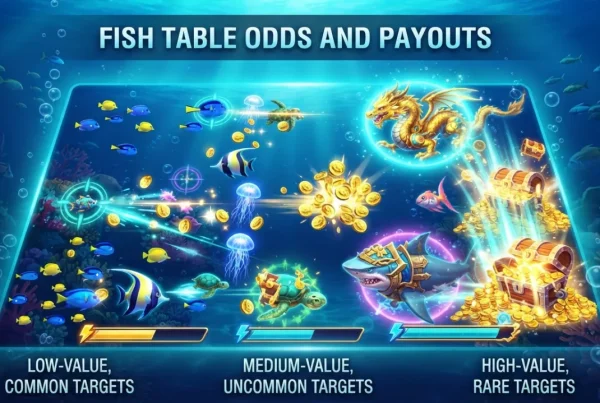
- Math model sheets. Ask for return-to-player figures, hit rates, and how each fish pays. Players will ask the same questions, so see what they read in odds guides.
- Code and IP rights. Learn whether you license or own the code, and whether you can modify it.
- State controls. Look for geo-blocking, age checks, and state exclusion lists.
- AMOE and coin tools. Check mail-in request tracking and dual-currency ledgers.
- ID checks and payments. Review KYC integrations, payout workflows, and audit logs.
- Responsible gaming tools. Look for limits, time-outs, self-exclusion, and links to help such as 1-800-MY-RESET.
- Support and references. Get uptime promises, response times, and at least two reference clients you can call. Read independent reviews too, since public review pages can show mixed feedback.

What Do Fish Table Software Deals Cost, and How Long Do They Take?
Costs and timelines vary widely, so ask for a full written quote. Deals usually follow one of three models: a one-time license, a monthly fee, or a revenue share.
Some vendors advertise fast launches, sometimes within weeks, along with low or no revenue share models. Treat such timelines as best-case numbers. Also budget extra time for lab testing and legal review.

What Mistakes Do New Operators Make?
These errors show up again and again:
- Buying after a demo alone.
- Skipping legal review for each target state.
- Ignoring state exclusion lists.
- Never testing the redemption flow from start to finish.
- Launching with weak responsible gaming tools.
- Having no plan for free entry.
- Trusting a distributor’s word on rights without paperwork.
Frequently Asked Questions
What is the difference between white label and turnkey?
A white label product is a ready platform you brand as your own. A turnkey product is a complete setup that is ready to launch, often with licensing and support. Vendors use the terms loosely, so ask for a written scope.
Can a vendor guarantee approval in my state?
No. Only regulators and courts decide legality. A vendor can supply compliance tools, but you carry the risk.
How do I check a lab certificate?
Contact the lab named on it and ask them to confirm the product, the version, and the valid dates. Also ask the relevant gaming authority if you have doubts.
What will players look for in my game?
Players look for clear rules, odds information, and fair payouts. Our fish table odds guide shows what they read before they play.
Want to see fish games the way players do? Browse the games on Fish Game Arcade and read how it works.
Disclaimer
This article is for general information only. It is not legal or financial advice. Gaming, sweepstakes, and promotions laws differ by state and change often, so work with a qualified gaming or promotions lawyer before you buy, launch, or sell any game. Vendor claims quoted here come from public marketing pages and have not been independently verified.
Sources
- Gambling.com: Best fish table games online
- Go Gambling News: North Carolina court calls fish tables illegal
- Greenberg Traurig: Nevada authorizes skill-based slot machines
- Casino Beats: California bans sweepstakes casinos as Newsom signs AB 831
- Mondaq: The importance of a valid sweepstakes AMOE
- GLI-19 Standards for Interactive Gaming Systems, v3.0
- GLI sample Certificate of Integrity
- National Council on Problem Gambling: 1-800-MY-RESET announcement